Source inertial navigation fiber optic gyroscope for drones, vehicles, and robots
Compare 14 inertial navigation fiber optic gyroscope units from verified Chinese suppliers. View specifications including accuracy grades, IP ratings, and output signals to select the right component for your project.
Key considerations
Products List


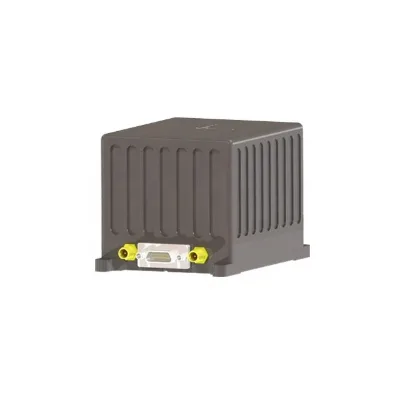


Comprehensive Sourcing Guide
Strategic Sourcing Guide for Inertial Navigation Fiber Optic Gyroscope Systems
Understanding Core Technical Specifications and Performance Metrics
When evaluating inertial navigation systems based on fiber optic gyroscope (FOG) technology, buyers must prioritize precise technical parameters that define system reliability and accuracy. The core of any FOG system lies in its ability to measure angular velocity and linear acceleration with minimal drift. Based on observed market data, high-performance units often feature a gyroscope measurement range of ±500°/s and an accelerometer measurement range of ±30g. These ranges are critical for applications involving high dynamic motion, such as aerospace platforms or heavy machinery navigation.
Accuracy is the primary differentiator in this category. Buyers should look for units specifying an accuracy grade, with observed market offerings ranging from 0.1G to 0.2G. This grade directly correlates to the precision of the navigation solution. Furthermore, attitude accuracy is a vital metric for stabilization and orientation tasks. Specific observed data indicates a horizontal attitude angle accuracy of 0.05 degrees (1 sigma) and a heading attitude angle accuracy of 0.1 degree (1 sigma) with a 2-meter baseline. These figures suggest a high level of stability suitable for surveying and precise positioning applications.
The output signal type is another essential technical consideration. Modern systems typically utilize digital output interfaces to ensure data integrity and ease of integration with control systems. The observed standard for data transmission interfaces includes RS422, which offers robust noise immunity over long distances. Additionally, the system's ability to provide RTK (Real-Time Kinematic) position accuracy is a significant value-add for navigation tasks. Verified specifications show RTK position accuracy of horizontal: 0.01m+1ppm and altitude: 0.015m+1ppm, indicating a capability for centimeter-level positioning when paired with satellite correction services.
Environmental resilience is equally important for field deployment. The operating environment is generally specified as room temperature, but the hardware must withstand harsh conditions. Observed units demonstrate an impact limit of 150g and a working vibration tolerance of 8g RMS across a frequency range of 20Hz to 2000Hz. These specifications ensure the device can survive the shock and vibration inherent in mobile platforms. The power consumption is another practical constraint, with observed units drawing ≤10W, powered by a supply voltage between 9V and 36V, allowing for flexibility in power source selection.
Compliance, Certification, and Standardization Verification
Navigating the regulatory landscape for inertial navigation components requires a rigorous verification of certifications and standards. While specific supplier claims vary, the presence of ISO certification is a high-confidence indicator of a manufacturer's commitment to quality management systems. Buyers should explicitly request proof of ISO certification status before finalizing any procurement, as this standard ensures that the manufacturing processes adhere to internationally recognized quality benchmarks.
Standardization extends beyond certifications to the physical and operational standards of the product. Observed product standards include specific dimensional configurations such as 555 and 105105105, which likely refer to internal component arrangements or packaging standards rather than the device footprint itself. However, physical dimensions are critical for integration. For instance, single package sizes have been observed at 80X80X50 cm, and standard product dimensions like 808060mm are noted for specific models. Buyers must verify that the physical footprint and mounting requirements align with their system architecture.
Packaging standards also play a role in ensuring product integrity during transit. Observed packaging details include "Box and Sponge" configurations and "Wooden box" options. The choice of packaging often reflects the value and fragility of the internal components. For high-precision FOG units, a wooden box with specialized internal cushioning is often the preferred method to mitigate shock and vibration risks during shipping.
Origin and place of manufacture are significant factors in compliance and supply chain transparency. The majority of observed units originate from China, with specific mentions of Shaanxi as a place of origin. Buyers should verify the specific manufacturing location to assess logistics costs, potential tariffs, and the reliability of the local supply chain. Additionally, the brand name "Huaxi" and "Micro Magic" have been observed in the market, indicating that multiple manufacturers operate within this sector. Buyers should not rely solely on brand recognition but must verify the specific model numbers, such as G-F3G90, G-F3G70, G-F70HB, UF700, and HXT-FD8040, to ensure they are sourcing the exact technical configuration required.
Cost Drivers and Pricing Structure Analysis
The pricing of inertial navigation fiber optic gyroscope systems is influenced by a complex interplay of technical specifications, customization requirements, and supply chain dynamics. The observed price range in the market is extremely wide, spanning from $1 to $458,900. This vast disparity indicates that the product category encompasses both entry-level components and high-end, mission-critical navigation systems. Buyers must understand that the lowest price points likely correspond to basic sensors or components with limited accuracy and functionality, while the upper end of the range reflects fully integrated systems with high-grade accuracy, ruggedized enclosures, and advanced signal processing.
Key cost drivers include the accuracy grade and the measurement range. Units with an accuracy grade of 0.1G and a wider measurement range typically command a higher price due to the complexity of the fiber optic coil manufacturing and the sophisticated signal processing algorithms required. Customization is another significant factor. The market data confirms that customization is available, and specific models are listed as "Customized." OEM (Original Equipment Manufacturer) support is also a noted attribute, allowing buyers to tailor the system to their specific application needs. These customizations, which may include unique mounting interfaces, proprietary software, or specific environmental hardening, will inevitably increase the unit cost.
The minimum order quantity (MOQ) also impacts the effective cost per unit. Observed MOQs range from 1 to 10 units. For buyers requiring a single unit for prototyping or testing, an MOQ of 1 is advantageous, though the unit price may be higher. Conversely, buyers purchasing in bulk (e.g., 10 units or more) may benefit from economies of scale, potentially lowering the average cost per unit. The supply ability, observed at 10,000 pieces per month, suggests that the market has the capacity to handle large orders without significant lead time delays, provided the specifications are standard.
Packaging and shipping costs are additional variables. The choice between standard "Box and Sponge" packaging and heavy-duty "Wooden box" packaging will affect the final landed cost. Furthermore, the single gross weight of 0.500 kg for certain models provides a baseline for freight calculations, but larger systems with more extensive packaging may incur higher shipping fees. Buyers should request a detailed breakdown of costs, including the base unit price, customization fees, packaging charges, and shipping, to ensure a transparent comparison between suppliers.
Typical Applications and Operational Use Cases
Inertial navigation fiber optic gyroscope systems are versatile components designed for a wide array of applications where precise orientation and positioning are critical. The observed usage categories include electric component testing, navigation, and stabilization. The specific combination of high accuracy, ruggedness, and digital output makes these systems ideal for industries such as aerospace, defense, marine navigation, and autonomous vehicle development.
One primary application is in the field of surveying and mapping. The observed RTK position accuracy of 0.01m+1ppm makes these systems suitable for high-precision geospatial data collection. The ability to maintain accurate heading and attitude angles (0.1 degree and 0.05 degree respectively) ensures that survey data remains reliable even in challenging environments where GPS signals might be intermittent or obstructed. The system's ability to operate in a room temperature environment while withstanding significant vibration and impact allows for deployment in mobile survey platforms.
Another critical application is in the stabilization of platforms. The high repeatability of <2 Arc Sec and the precise attitude angle accuracy make these FOG systems essential for stabilizing cameras, antennas, and weapon systems on moving vehicles. The direct connected installation method simplifies integration into existing platforms, reducing the complexity of the installation process. The power consumption of ≤10W is particularly beneficial for battery-operated or remote systems, ensuring long operational times without excessive power draw.
In the realm of autonomous systems, the digital output and RS422 interface facilitate seamless integration with onboard computers and control systems. The system's ability to measure angular velocity and linear acceleration allows for dead reckoning navigation, where the system calculates its position based on previous known positions and current motion data. This is crucial for applications where GPS is unavailable, such as underwater operations or indoor navigation. The observed warranty of 1 year provides a baseline for reliability, but buyers should verify if extended warranty options are available for mission-critical applications.
Supplier Evaluation and Quality Assurance Protocols
Evaluating suppliers for inertial navigation components requires a multi-faceted approach that goes beyond simple price comparisons. Buyers should prioritize suppliers who demonstrate a clear commitment to quality management, evidenced by ISO certification. The presence of specific model numbers and detailed technical specifications in the supplier's catalog is a positive indicator of transparency and product maturity. However, buyers must verify that the specifications provided match the actual product, as product attributes should be treated as observations rather than universal claims.
Quality assurance protocols should include a review of the supplier's testing procedures. While specific test results are not provided in the general market data, buyers should request documentation on how the units are tested for repeatability, accuracy, and environmental resistance. The observed specifications for working vibration (8g RMS) and impact limit (150g) should be validated through independent testing or third-party certification. The single point position accuracy, noted as horizontal: 1.5m and altitude: 2.5m, serves as a benchmark for the system's standalone performance, and buyers should ensure that the supplier can consistently meet these metrics.
Supplier reliability is also assessed through their supply ability and lead times. An observed supply ability of 10,000 pieces per month indicates a robust manufacturing capacity. Buyers should inquire about lead times for both standard and customized orders to ensure they align with their project timelines. The availability of OEM support and customization options suggests that the supplier is flexible and capable of adapting to specific buyer requirements. However, buyers should be cautious of suppliers who promise capabilities that exceed the observed market standards without providing verifiable evidence.
Packaging and logistics are also part of the quality assurance process. The use of wooden boxes and specialized packaging materials like sponge indicates a concern for product protection during transit. Buyers should verify that the packaging meets the requirements for the specific shipping conditions their products will encounter. The single gross weight of 0.500 kg for certain models provides a reference point for logistics planning, but buyers should confirm the actual weight and dimensions of the specific units they intend to purchase.
Long-Term Procurement and Lifecycle Management
Sourcing inertial navigation fiber optic gyroscope systems is not a one-time transaction but a long-term commitment that requires careful lifecycle management. The warranty period, observed as 1 year, is a critical factor in the total cost of ownership. Buyers should evaluate the terms of the warranty, including what is covered, the process for claims, and the availability of replacement parts. For mission-critical applications, buyers may need to negotiate extended warranty periods or service level agreements (SLAs) to ensure continuous operation.
Maintenance and calibration are ongoing requirements for maintaining the accuracy of FOG systems. The observed accuracy grades and attitude angle accuracies are subject to drift over time, and regular calibration is necessary to maintain performance. Buyers should inquire about the supplier's calibration services and the recommended calibration intervals. The digital output and RS422 interface facilitate remote monitoring and diagnostics, which can help in identifying potential issues before they lead to system failure.
Supply chain resilience is another long-term consideration. The observed supply ability of 10,000 pieces per month suggests a stable supply chain, but buyers should assess the supplier's ability to handle fluctuations in demand and potential disruptions. Diversifying the supplier base or establishing a strategic partnership with a reliable manufacturer can mitigate these risks. The availability of customization and OEM support allows buyers to adapt the system to evolving requirements, ensuring that the investment remains relevant over time.
Finally, buyers should consider the obsolescence risk associated with electronic components. The rapid pace of technological advancement in the navigation and sensor industry means that older models may become obsolete quickly. Buyers should plan for future upgrades and ensure that the supplier has a roadmap for product development. By focusing on long-term procurement strategies, buyers can ensure that their inertial navigation systems remain reliable, accurate, and cost-effective throughout their operational lifecycle.
FAQs
What accuracy grades are available for inertial navigation fiber optic gyroscope systems?
Available accuracy grades include 0.1G and 0.2G for high-precision applications. These grades directly correlate to the navigation solution's precision, with 0.1G offering superior stability for demanding surveying and positioning tasks.
Can buyers customize inertial navigation fiber optic gyroscope units for specific needs?
Yes, customization is available with OEM support for tailored solutions. Buyers can request specific configurations such as unique mounting interfaces or proprietary software to align the system with their exact operational requirements.
Which data transmission interfaces are standard for these inertial navigation systems?
The standard data transmission interface is RS422 for robust noise immunity. This digital output type ensures data integrity and facilitates seamless integration with control systems over long distances in various environments.
How does the inertial navigation fiber optic gyroscope handle vibration and impact?
The unit withstands working vibration of 8g RMS between 20Hz and 2000Hz. It also features an impact limit of 150g, ensuring survival during the shock and vibration inherent in mobile platform deployments.
What is the typical power consumption for these inertial navigation fiber optic gyroscope devices?
Power consumption is typically 10W or less for efficient operation. The devices support a power supply voltage between 9V and 36V, allowing flexibility in power source selection for battery-operated or remote systems.
Which certification standards apply to manufacturers of inertial navigation fiber optic gyroscope systems?
ISO certification is a high-confidence indicator of quality management systems. Buyers should verify this certification to ensure manufacturing processes adhere to internationally recognized quality benchmarks before finalizing procurement.
What is the minimum order quantity for sourcing inertial navigation fiber optic gyroscope units?
The minimum order quantity ranges from 1 to 10 units depending on the supplier. This flexibility allows buyers to purchase single units for prototyping or larger batches for production without significant lead time delays.